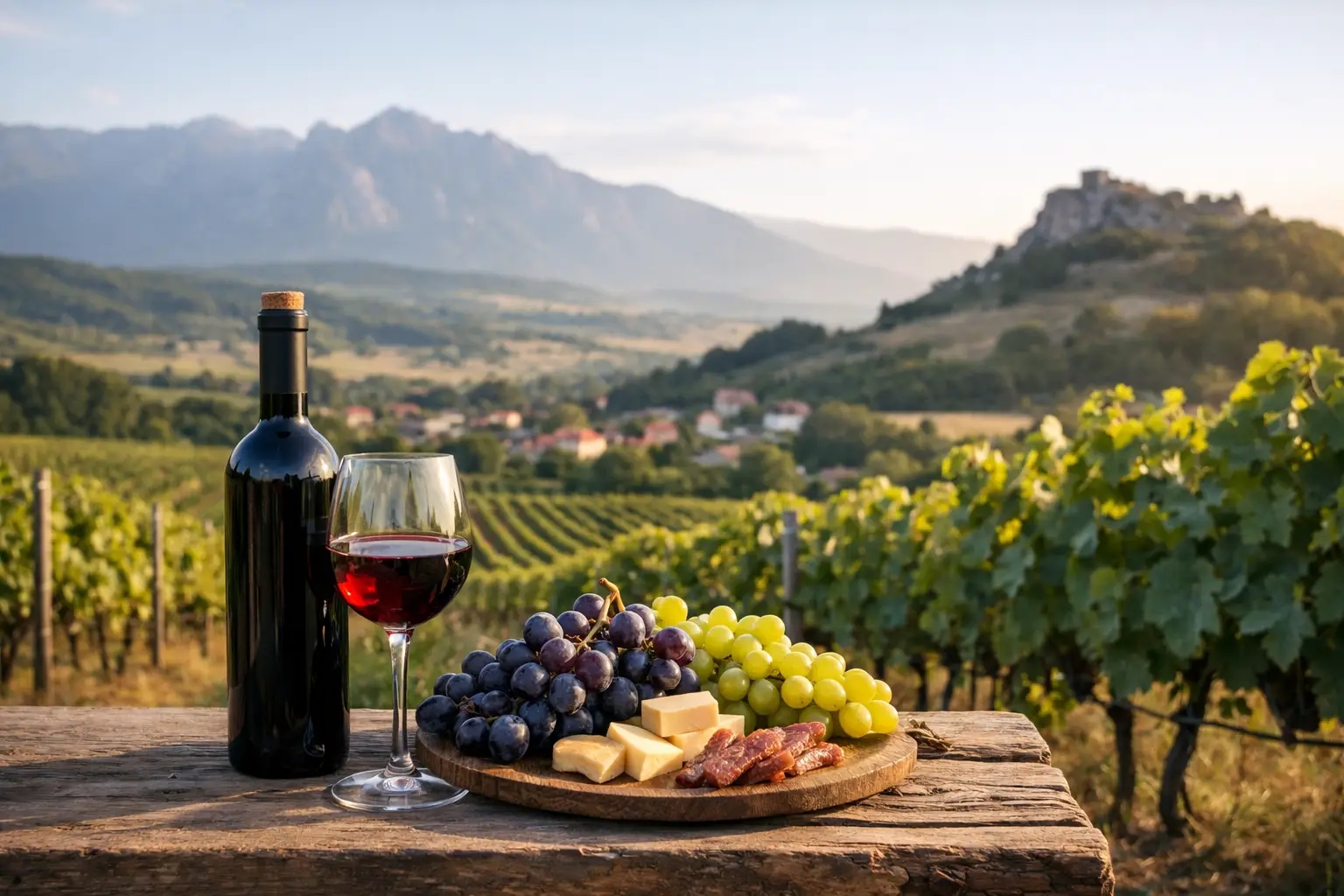
The Terroir of Bulgarian Wine
There are wines that are pleasant, correct, and easy to drink. And there are wines that leave a sense of place — of wind, soil, sunlight, and the hand of the person who worked with care. This is where the conversation about the terroir of Bulgarian wine begins. Not as a trendy word, but as the most honest answer to why one bottle has character while another simply has taste.
When we talk about terroir, we’re not talking only about geography. Terroir is a combination of climate, soil, exposure, altitude, water regime, grape variety, and human decisions. A vineyard is not a factory. Two plots close to each other can produce different results if the soil differs, if the air moves differently, or if yields are kept under control. That’s why good wine begins long before the cellar.
What terroir in Bulgarian wine actually means
In Bulgaria, the topic is especially interesting because the country gathers great diversity within a relatively small territory. Black Sea influence, continental climate, river valleys, hilly massifs, limestone and clay soils — all of this creates many faces of Bulgarian wine. There is no single national taste. And that is precisely the strength.
Terroir is not a guarantee of quality by itself. An excellent site can be wasted through excessive yields, poor harvest timing, or heavy-handed winemaking. But when natural conditions meet discipline and restraint, the wine begins to speak clearly about its origin. This is a value that a wine lover recognizes from the first glass — and seeks more consciously over time.
Why Bulgaria has strong terroir potential
Bulgaria is not an interesting wine country only because of its history. It is interesting because nature here allows for different styles — from fresh, aromatic whites to full-bodied reds with good structure. This diversity gives producers freedom, but also demands precision. Not every place suits every grape variety, and not every vintage should be made the same way.
In the northeastern part of the country, for example, proximity to the Black Sea softens temperatures. Maritime air, winds, and light behave differently compared to inland regions. This often benefits white varieties and wines where freshness, clean aroma, and good acidity are desired. But even here there are no automatic rules — excessive humidity, poor vineyard practices, or late harvest can blur the advantages.
Southern regions often produce more density, ripe fruit, and softness, especially in red varieties. Higher-altitude sites can preserve freshness even in warm years. River valleys create their own microclimates. In other words, Bulgarian terroir is not one whole, but a map of different possibilities.
Soil, climate, and terrain — the three quiet authors of wine
Soil does not literally give flavor, as is sometimes oversimplified. It influences water balance, nutrients, and how the vine grows and ripens fruit. Poor, well-drained soils often limit excessive growth and direct energy toward more concentrated grapes. Clay retains water differently than limestone. Sandy soils make the vine behave differently. This affects structure, aroma, and ripeness.
Climate sets the rhythm. Day and night temperatures, rainfall, sunlight duration, and wind shape acidity, sugars, and phenolic maturity. In cool years, wines can be tighter and more tense. In warm years — fuller, fruitier, and sometimes less refined. There is no absolutely good or bad year. There are years favorable to certain varieties and styles, and years that require more precision.
Terrain is often underestimated. Slope, exposure, and altitude change light and heat, and thus ripening. A south-facing slope behaves differently from a north-facing one. A vineyard that catches airflow may stay healthier and drier after rain. These details rarely appear on the label, but they are felt in the glass.
Bulgarian grape varieties and their connection to place
When discussing Bulgarian wine terroir, the role of grape varieties cannot be ignored. International varieties like Sauvignon Blanc, Chardonnay, Merlot, and Cabernet Sauvignon provide a good basis for comparing regions because many people already know their style. They clearly show how different places change aroma, structure, and length.
But true depth also comes from local varieties. They often carry stronger regional identity and a more distinct story. Not every local variety is easy to work with, and not every one suits every commercial goal. Some offer excellent authenticity but require more patience from the consumer. Others are easier to understand from the first sip. This is where a good producer has an important task — to preserve character without making the wine difficult to appreciate.
The human factor is part of terroir
It is often said that terroir is nature. That is only half true. The grower and winemaker are not observers — they are participants. Decisions about pruning, yield, harvest timing, skin contact, and vessel choice all influence how terroir will express itself.
There is a delicate balance. Too much intervention can mute origin. Too little intervention in a challenging year can leave the wine underdeveloped. Craft lies in judgment. The best wines do not impose their technology. They feel natural — but behind that naturalness stands a great deal of work and control.
In this sense, the cellar does not replace the vineyard — it gives it a voice. For producers like Izba Kaliakra, this is daily practice: preserving regional character from vineyard to bottle without sacrificing purity and stability.
How terroir is recognized in the glass
A consumer does not need to speak like a sommelier to sense terroir. It’s enough to notice a few simple things. First comes freshness — not only acidity, but an overall feeling of a lively wine. Then comes the fruit profile: citrus, herbal, stone fruit, ripe, or dark. Then texture — light, tight, velvety, solid.
Wines with clear origin often have something beyond fruit — a hint of salinity, mineral tension, herbal nuance, length, or energy that doesn’t feel added. It’s not magic and doesn’t appear the same way in every bottle. But when a wine has a sense of place, it is rarely one-dimensional.
Terroir and style are not the same
A wine can have a modern, clean, accessible style and still carry terroir. It doesn’t need to be rustic, wild, or difficult to be authentic. Likewise, a wine with heavy oak, density, and impressive aroma is not always terroir-driven. Sometimes style dominates place.
For some consumers, this is not a problem — they seek a certain sensation and get it. But for those who choose wine by origin, the difference is essential. They want not only good execution but the signature of region and vintage.
Why terroir matters when choosing wine
When you know where a wine comes from, the choice becomes more meaningful. You’re not buying just color, variety, and price. You’re buying the story of a place, climate, and work. This makes tasting richer and trust in the producer more grounded.
Terroir also has practical value. If you enjoy fresh, expressive whites, you’ll look for regions with suitable climate and good acidity. If you prefer ripe, structured reds, you’ll look elsewhere. Over time, people begin to recognize not only varieties but places. That is the more mature form of wine culture.
The best part is that Bulgarian wine has much to show in this direction — not as a copy of foreign models, but with its own voice. Sometimes that voice is maritime and fresh, sometimes warm and full, sometimes delicate and quiet. But when the vineyard is respected and the wine made with restraint, terroir doesn’t need long explanation — it simply stays in memory.
Next time you open a bottle of Bulgarian wine, don’t look only for aroma and taste. Look for the place inside it. That’s often the reason you’ll want another glass.
FAQ
1. What is the terroir of Bulgarian wine?
Terroir is the combination of climate, soil, terrain, and human decisions that shape a wine’s identity.
2. Why does Bulgaria have strong terroir potential?
The country offers diverse microclimates and soils, enabling a wide range of white and red wine styles.
3. How can you recognize terroir in wine?
Look for freshness, texture, minerality, and authentic fruit expression, which reveal a wine’s origin.
Author: Ani Kostova