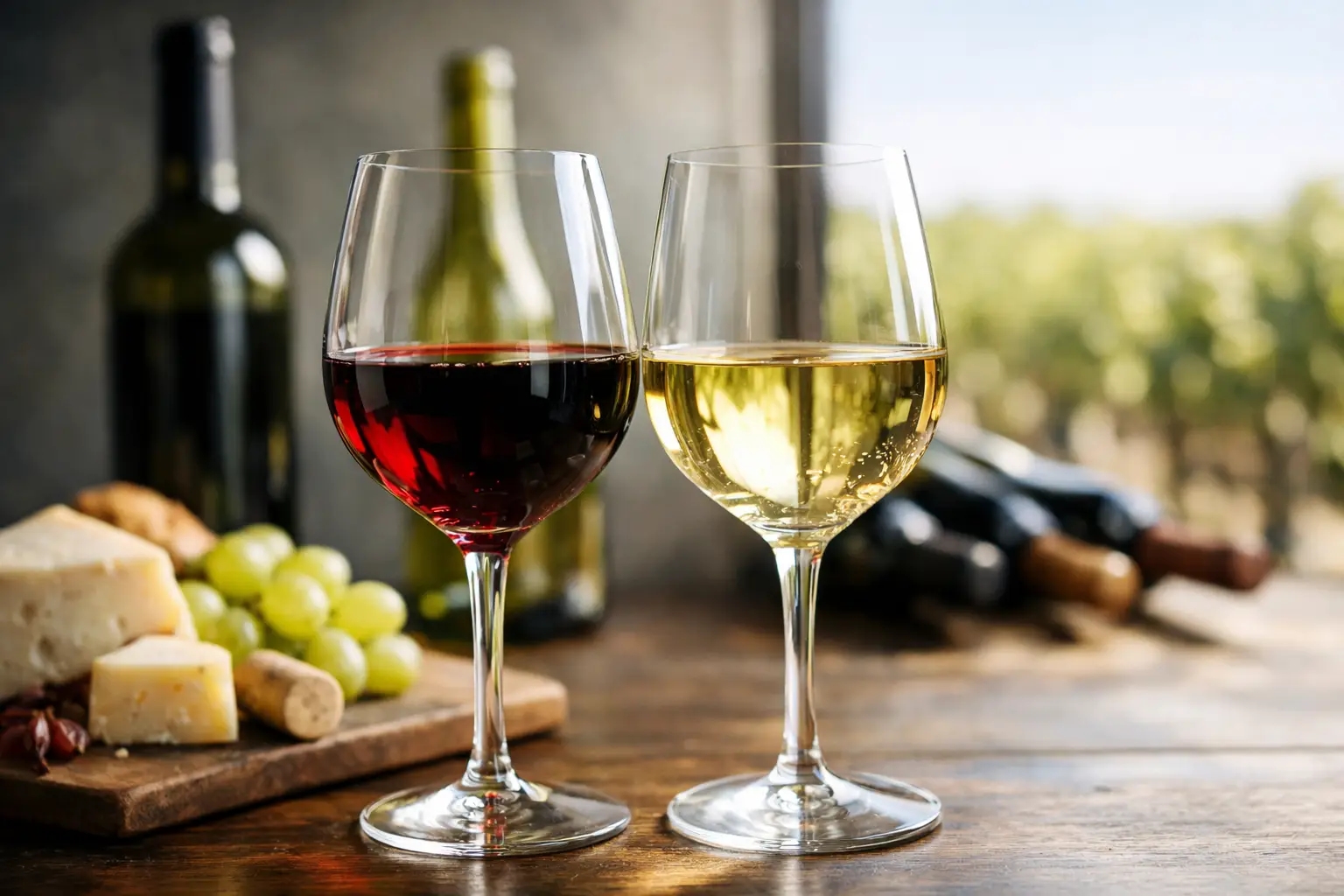
What Does “Dry Wine” Mean, and How Can We Tell If a Wine Is Dry?
A single sip can be as fresh as a sea breeze, fruity, mineral, or with a delicate oak nuance. However, this does not necessarily make it sweet. When you ask what dry wine means, the answer begins not with the aroma, but with the amount of sugar left in the wine after fermentation. The dry style is among the most preferred because it allows the variety, the land, and the vintage to speak clearly.
For the producer, dry wine is the result of carefully guided fermentation. For the person at the table, it is a wine with a clean taste, good structure, and a place next to food. The difference between these two perspectives is small but useful: one explains the process, and the other — the pleasure in the glass.
What dry wine means according to sugar
Grapes contain natural sugars. During alcoholic fermentation, the yeasts convert them into alcohol, carbon dioxide, and aromatic compounds. When almost all the sugar has been converted, we get dry wine. The remaining amount is called residual sugar.
In European practice, dry wine is usually considered to be wine with up to 4 grams of sugar per liter. A higher value, up to 9 grams per liter, is also allowed when the acidity is high enough to balance the perception of sweetness. That’s why the number alone doesn’t tell the whole story. Two wines with similar residual sugar content can be perceived differently — one fresh and tight, the other softer and rounder.
Dry does not mean completely without sugar. It means that sugar is not the leading taste element. In a well‑made dry wine, the focus remains on the fruit, freshness, texture, and the characteristic signature of the variety.
Dry does not mean bitter, sour, or “astringent”
A common misconception is that every dry wine must leave a rough, drying sensation in the mouth. In reality, this sensation most often comes from tannins, not from the lack of sugar. Tannins are found mainly in red wines, as they come from the grape skins, seeds, and sometimes from aging in oak barrels. They create structure and potential for development, but in young wine they can be more noticeable.
Acidity is another separate element. It brings freshness and makes white or rosé lively, especially when served well chilled. High acidity can make dry wine feel more tense and citrus‑driven, without turning it into “sour” in the unpleasant sense.
There is also a third factor — alcohol. Higher alcohol often creates a sense of greater softness and ripeness of the fruit. Thus a completely dry red wine may seem almost sweet on the nose, because it evokes ripe cherries, blue plums, chocolate, or vanilla. This is an aromatic perception, not proof of added or remaining sugar.
How the character of dry wine is created
The dry style is not a mechanical decision like “we let the fermentation finish.” Quality begins long before the winery — in the vineyard. The ripeness of the grapes, the moment of harvest, the health of the fruit, and the balance between sugars and acids determine the material the winemaker will work with.
Then comes the control over temperature, yeasts, skin contact, and time. In white wines, lower fermentation temperatures often preserve clean fruity and floral aromas. In red wines, longer skin contact builds color, tannins, and depth. In some styles, aging on fine lees adds volume and a creamy texture without making the wine sweet.
This is where the difference becomes clear between a dry wine made simply by technique and a dry wine with character. Good balance does not hide the variety nor burden the palate. It leaves the feeling that the next sip is a natural continuation of the first.
Why some dry wines seem more fruity than others
Fruity aroma is not the same as sweet taste. Sauvignon Blanc may evoke grapefruit, gooseberry, and fresh herbs, while Chardonnay may suggest apple, peach, or ripe pear. Muscat can carry distinct floral and grapey tones even when vinified in a dry style. In red varieties like Merlot, Cabernet Sauvignon, and Syrah, ripe grapes can express black fruits, jammy nuances, or spices, yet the wine can still be dry.
Serving temperature also changes perception. Overly warm white wine loses part of its freshness and seems softer. Too cold red wine can emphasize tannins and acidity. Dry white wines usually show their character best around 8–12°C, rosés around 9–12°C, and reds approximately between 15 and 18°C depending on their style and body.
How to recognize dry wine when choosing
The label often gives a useful direction, but does not always state “dry” directly. Look for indications such as dry, sec, trocken or secco on wines from abroad. For Bulgarian wines, the most reliable guide is the description of the style, the variety, and the information provided by the producer.
Don’t rely solely on color. There are dry white, rosé, and red wines, as well as dry sparkling wines. Also, don’t assume that all aromatic varieties are semi‑sweet. A dry Muscat, for example, can be extremely aromatic yet fresh and tight in taste.
If you are looking for a light and refreshing experience, choose a dry white or rosé with good natural acidity. For dinners with richer dishes, pick a dry red with more mature tannins. And when buying a gift, dry wine is often a safe choice because it is easier to pair with different foods and occasions.
The best way to build confidence is to compare. Try a dry Sauvignon Blanc next to a more voluminous dry Chardonnay, or a young dry Merlot next to a blend with Cabernet Sauvignon. This way you will feel that the dry style is not a single taste, but a wide palette of characters.
How dry wine pairs with food
The reason dry wines are so valued at the table is their balance. The acidity of dry white wine refreshes fatty dishes, fish, seafood, salads with cheese, and vegetable dishes. Dry rosé feels excellent alongside light meats, Mediterranean cuisine, grilled vegetables, and summer evenings where the food should not overpower the wine.
Dry red wine has a natural place next to roasted meat, game, aged cheeses, mushrooms, and dishes with deeper sauces. Here the tannins bind with the proteins and fats in the food, and the wine becomes softer and more harmonious. There is no need for every pairing to follow strict rules. What matters is that the weight of the dish and the weight of the wine are close.
The Black Sea region brings a special freshness and brightness to its wines. Pair dry white with fresh fish, mussels, or cheese from a local producer, and dry red with slow‑cooked meat and a conversation that does not rush to end. At the tastings of Kaliakra Winery, these small comparisons between variety, vintage, and food help guests find their own style.
Dry wine does not require a special vocabulary to be appreciated. Curiosity, the right temperature, and time for a calm sip are enough. Let your palate guide you — it will tell you most accurately which wine has your character.
FAQ
1. What does “dry wine” actually mean?
It means wine with very low residual sugar – usually up to 4 g/L, sometimes up to 9 g/L when acidity balances it.
2. Can dry wine taste sweet?
Yes – aromatically, not in sugar. Fruit aromas can feel sweet even when the wine is fully dry.
3. Does dry mean bitter or sour?
No. Bitterness comes from tannins, and sourness from acidity – not from lack of sugar.
4. How is dry wine made?
By fermenting almost all natural grape sugar into alcohol. Quality depends on ripeness, temperature, and timing.
5. Why do some dry wines feel fruitier?
Because of grape variety, ripeness, and serving temperature. Fruit aroma ≠ sweet taste.
Author: Desislav Kostov