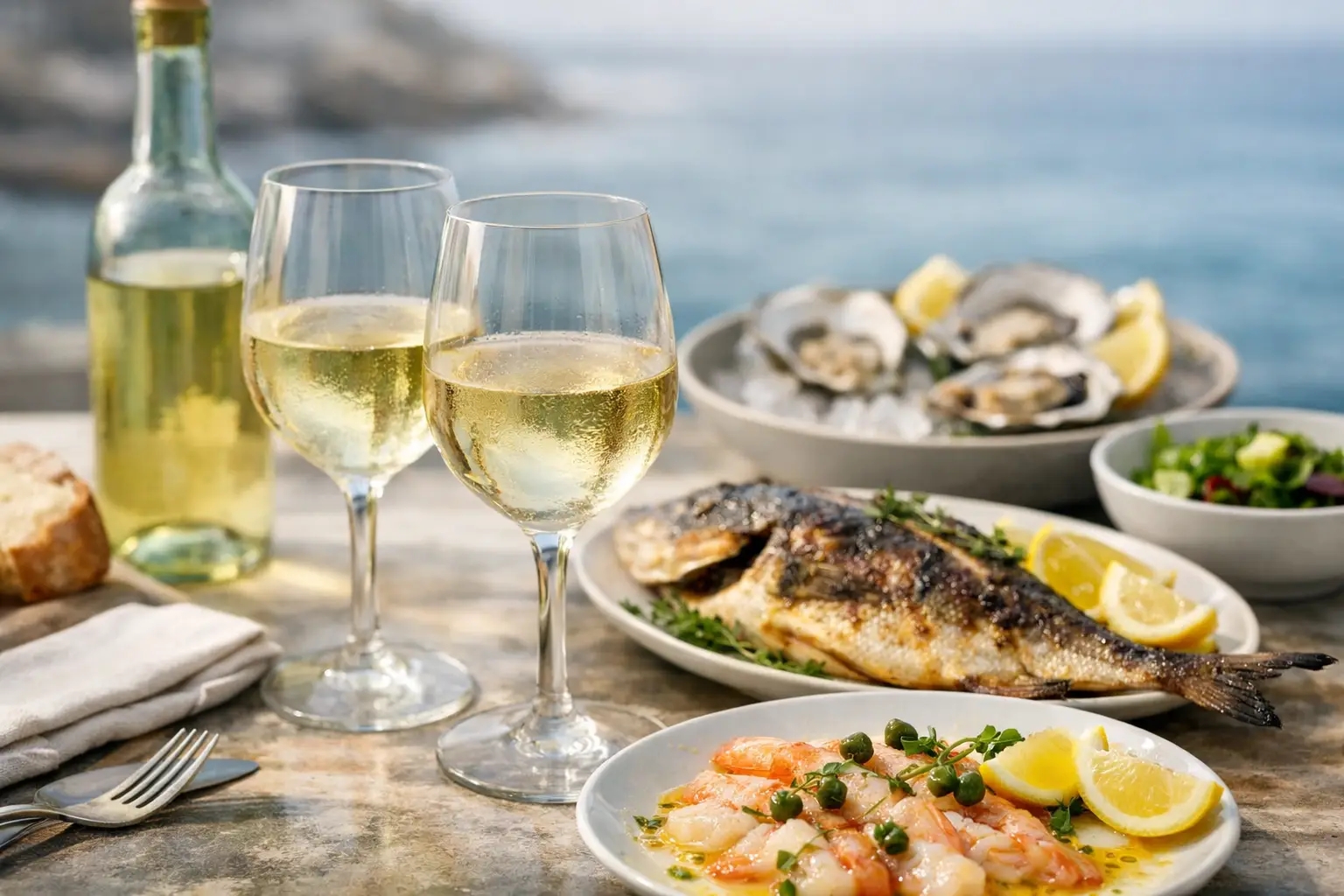
White Wine for Fish—How to Choose It
Grilled sea bream with lemon, charred sea bass, or fried horse mackerel by the seaside — each of these dishes calls for a different approach in the glass. When choosing white wine for fish, the most common mistake is looking for one universal solution. There are reliable directions, but the right pairing depends on the type of fish, the fat content of the meat, the sauce, and whether you’re aiming for freshness, softness, or a more expressive aromatic profile.
Fish is a delicate product, but its character varies widely. That’s why a light, fresh white wine is often the right choice, yet not always the best one. Firm white fish, oily sea fish, grilled fish, and fish served in a rich buttery sauce behave very differently on the table. The wine should support the flavor, not overpower it.
How to Choose White Wine for Fish
The most useful rule is simple: consider the texture before the grape variety. If the fish is fine and tender, the wine should also be lighter, with good acidity and a clean profile. If the fish is fattier or the dish includes butter, cream, or a richer sauce, the wine can have more body and a riper character.
Acidity is key. It refreshes the palate and makes the pairing lively, especially with roasted or oily fish. A wine with low acidity next to a lemon-based sauce often feels flat. On the other hand, an overly aromatic or heavy white wine can dominate a delicate dish and overshadow its subtle marine nuances.
The cooking method also matters. Fried fish calls for freshness and purity. Grilled fish needs a bit more structure. Sauces require balance with fat, salt, and spices. This is why the choice starts not with the label, but with the plate.
Grape Varieties That Perform Best — Highlighting Our Terroir
In our region, several grape varieties show exceptional potential for white wines, especially when it comes to pairing them with fish.
Sauvignon Blanc thrives beautifully here thanks to the sea breeze and moderate temperatures. It produces wines with bright freshness, herbal nuances, citrus notes, and a distinct minerality. It is ideal for white fish, shellfish, dishes with lemon, green herbs, and light dressings. In our terroir, the variety expresses purity, elegance, and excellent structure without overwhelming the palate.
Muscat Ottonel — in its dry style — is a wonderful partner to Black Sea cuisine. Its aroma is delicate and floral without being heavy; acidity remains vibrant, and the profile stays clean and refreshing. Muscat brings a sense of place and is especially suitable for steamed fish, roasted white fish, and herb‑based dishes.
German Riesling — the queen of white wines. Riesling is a unique variety that can be enjoyed both young and after long aging. Its true value reveals itself with time in the bottle — the longer it matures, the richer and more complex the aroma becomes. The typical petrol nuance in the nose is a hallmark of quality and maturity. There are very few plantings of true German Riesling in Bulgaria — and we are among them. The variety loves cooler climates, is highly specific, and requires precision, which makes our terroir especially suitable. Riesling is an excellent choice for oily fish, grilled fish, citrus‑based dishes, or more aromatic sauces.
Chardonnay — in a fresher style — is excellent for roasted fish, sea bass, sea bream, or white fish with vegetables. For richer recipes with butter or creamy sauces, a fuller‑bodied Chardonnay can be the right match.
Dimyat and other aromatic varieties — when dry, clean, and well‑balanced — are wonderful with Black Sea cuisine and highlight the regional character.
Choosing According to the Type of FishFirm white fish such as cod, hake, turbot, or filleted white fish pairs best with delicate, dry wines. They don’t burden the flavor and leave a sense of purity. If the fish is steamed, baked, or cooked with minimal fat, a fresh white wine is almost always the right choice.
Oily fish like salmon, mackerel, or tuna require more support. A very light wine can disappear next to them. Fuller-bodied whites with good structure and ripe fruit work better because they can stand up to the rich texture of the fish.
For grilled sea fish, especially when there’s a slight smoky tone, the wine shouldn’t be too airy. You need a balance between freshness and character. If you add olive oil, herbs, and lemon, the wine should offer enough liveliness but also some body.
Fried fish pairs best with dry, fresh, clean white wine. The reason is simple — the fat and crispy crust call for a sip that refreshes. Too soft or slightly sweet wines make the dish feel heavier.
The Sauce Matters as Much as the Fish
Many people choose wine based on the main ingredient, but often the sauce is what determines the pairing.
Fish in lemon sauce and fish in buttery garlic sauce are two completely different tasks. In the first case, acidity in the wine is almost mandatory. In the second, a softer, rounder style may be more suitable.
Tomatoes, capers, olives, and Mediterranean herbs also change the choice. Here, a more aromatic white wine can be a better solution than a completely neutral one. If the dish includes dill, parsley, thyme, or fresh green notes, a lively and fresh wine often feels most natural.
With creamy sauces or herb butter, don’t rush toward the lightest wine on the table. It may taste sharp next to the rich sauce. A wine with a bit more volume and softness works better, as long as it remains dry and well‑structured.
Temperature and Glassware Matter TooA well‑chosen wine can lose its charm if served too cold — a common mistake with white wine for fish. When overly chilled, the aroma closes, the texture disappears, and only acidity and coldness remain. For most dry whites, moderate cooling is the better option.
Glassware also plays a role, though not as a complicated ritual. A more open glass allows the aroma to develop, especially if the wine has more character. For very fresh and light styles, a tighter shape works fine. The important thing is not to treat the wine as a faceless cold addition, but as an equal part of the meal.
Common Mistakes When Pairing White Wine with FishThe first is the automatic rule that every fish requires the lightest possible white wine. It sounds convenient, but it’s not true. Oily fish or richly prepared dishes often need more body.
The second is choosing heavily oaked or overly aromatic wine for delicate fish. Then the wine becomes the center of attention, and the food fades into the background. If the goal is for the fish to shine, the wine must show restraint.
The third is ignoring the salt, acidity, and fat in the recipe. They change the perception of the wine more than many expect. Good pairing is rarely accidental — it’s based on a sense of balance.
The Black Sea Character in the Glass
When fish is part of a Black Sea table, the most natural pairings often come from wines born in the same regional context. This isn’t romanticism — it’s practical experience. The maritime climate, freshness, salty nuances in the cuisine, and the style of local dishes often find their natural counterpart in white wines with a clean profile, good acidity, and clear origin.
This is why a producer who knows the land, the grapes, and the regional style from vineyard to bottle can offer a more meaningful choice than an anonymous universal wine. At Kaliakra Winery, we see white wine not just as a category, but as an expression of place, season, and character. When this is felt in the glass, pairing with fish becomes effortless.
A Reliable Choice at Home
For roasted white fish, start with a dry, fresh white wine with a clean aromatic profile. For grilled fish, look for a wine with a bit more structure. For fried fish, stay on course with lively acidity. For oily fish or buttery sauces, choose a fuller style — but without unnecessary heaviness.
If you’re torn between two bottles, the fresher and better‑balanced one usually wins. Fish rarely needs showiness. It needs respect for its own flavor, and a good white wine does exactly that — it stands confidently beside the dish without taking over.
Next time fish is on the table, don’t just reach for any white wine. Choose the right white wine for the specific dish — that’s where the true pleasure of pairing begins.
FAQ
1. What is the best white wine for fish?
Dry, fresh white wines with good acidity and a clean profile pair best, highlighting the natural flavor of the fish.
2. How do I choose wine based on the type of fish?
Lean fish needs delicate wine, fatty fish requires fuller styles, and grilled fish calls for balance between freshness and structure.
3. What mistakes should I avoid when pairing white wine with fish?
Avoid overly aromatic, heavy, or oaked wines with delicate dishes, and avoid low‑acidity wines with fatty fish or lemon sauces.
Author: Ani Kostova