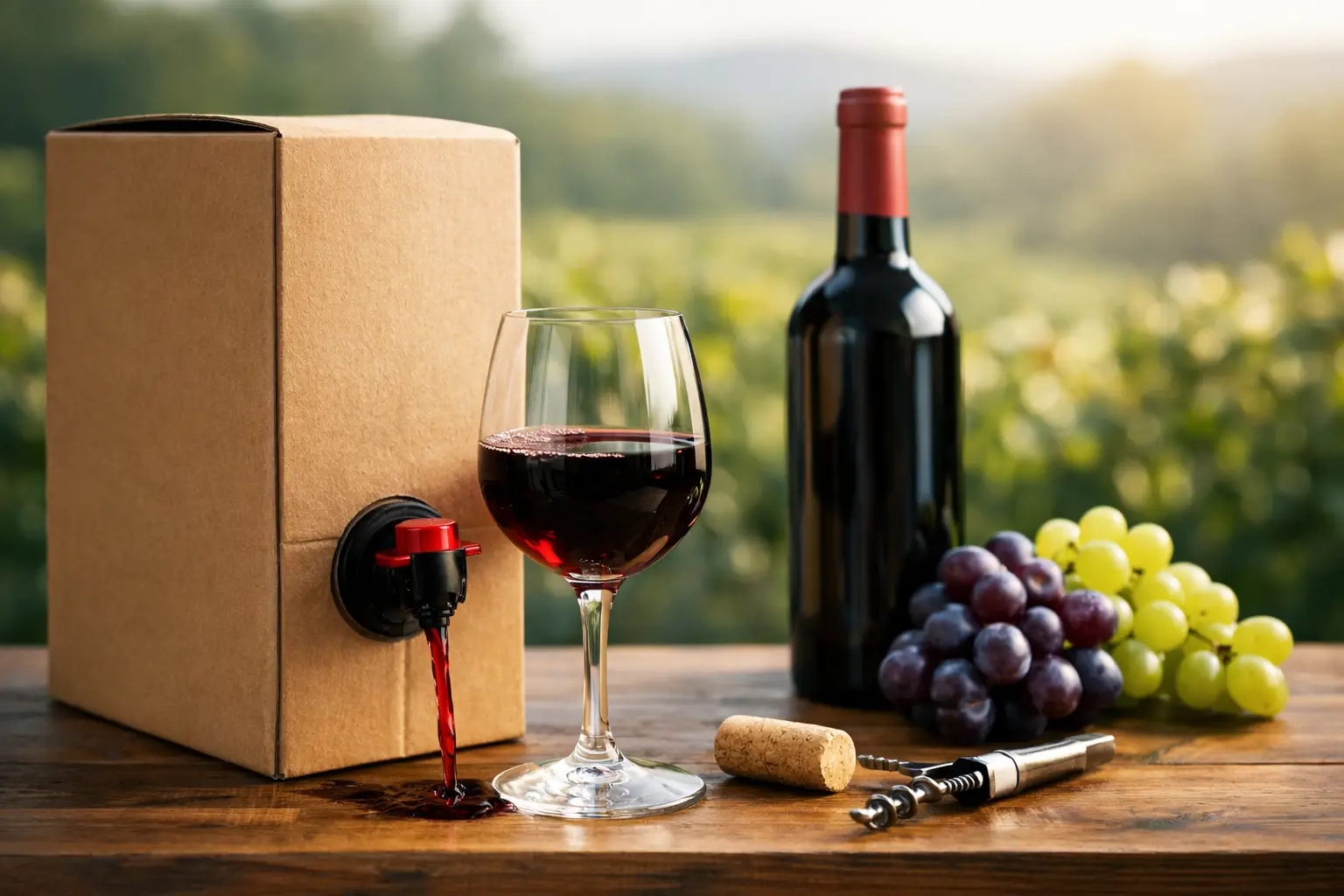
Wine in a Bag-in-Box—Is It a Good Idea?
Opening a bottle for a single glass and wondering two days later whether the wine is still in good shape — that’s a familiar situation. This is exactly where bag‑in‑box wine has its clear place: not as a compromise, but as a smart format for people who want convenience, longer freshness after opening, and reliability in everyday consumption.
In Bulgaria, this type of packaging was long viewed with suspicion. The reason was not the format itself, but the way the market used it — often for cheap, anonymous wines where price mattered more than origin or character. This created the false impression that bag‑in‑box automatically means low quality. The truth is more interesting: quality never comes from the packaging alone. It begins in the vineyard, passes through the cellar, and reaches the consumer through decisions that must serve the wine itself.
What bag‑in‑box wine actually is
The format is simple and efficient. The wine is stored in a flexible inner pouch with a tap, placed inside a cardboard box. When you pour, the pouch collapses and prevents air from entering. This is the major difference compared to a bottle, which begins to oxidize its contents gradually after opening.
For everyday use, this matters. If you drink a glass with dinner, host guests over the weekend, or want wine at hand for more informal occasions, bag‑in‑box often turns out to be more practical than several separate bottles. Not for every wine and not for every situation, but in many homes this is the format that works best.
When bag‑in‑box wine is an excellent choice
The strongest advantage of this format lies in the rhythm of real life. Not every evening calls for ceremonially opening an aged red. Sometimes you simply want a well‑made white for fish, a rosé for a summer table, or a soft red for a shared dinner without unnecessary formality.
This is exactly where bag‑in‑box wine shows its strengths. It is convenient for families, guest houses, gatherings with more people, summer terraces, weekend homes, and even for professional use in small venues where consistency in serving wine by the glass matters. The format saves space, cools easily, and pouring is quick and clean.
There is also something important — less waste. With bottles, it often happens that part of the wine remains and loses freshness. With bag‑in‑box, this risk is significantly lower. For people who value the product and don’t want to waste it, this is not a minor detail.
Does bag‑in‑box mean lower quality
Not necessarily. This is the most important part of the conversation. The format does not make a wine good or bad. It is simply a container. Yes, the market offers bag‑in‑box options with mediocre content. But there are also bottles filled with equally mediocre wine, dressed in a more impressive appearance.
When the producer works with their own grapes, controls vinification, and carefully selects which wines are suitable for this type of packaging, the result can be very good. Usually, the most successful bag‑in‑box wines are fresh, fruity, early‑drinking styles — whites, rosés, and reds without the ambition for long bottle aging. This does not make them less valuable. On the contrary, when made cleanly and honestly, they deliver exactly what they promise: character, balance, and uncomplicated pleasure.
For serious, structured wines with potential to evolve over years, the bottle remains the more appropriate form. There, the ritual, storage, and the very style of the wine require a different approach. In other words, the choice is not either‑or — it depends on the purpose.
How to judge whether a bag‑in‑box wine is worth it
Look for the same signs you would look for in a bottle. Is there a clearly stated producer? Is the origin mentioned? Is there information about the grape variety or style? Does it seem that a real winery stands behind the product, rather than anonymous filling with no story?
When the wine comes from a producer who stands behind it with their name and reputation, the chance of consistency is much higher. This is especially important for people who buy larger formats. They are not looking for surprises — they are looking for trust, knowing that every glass will be at the expected level.
Style is also a good indicator. If you expect a fresh Sauvignon Blanc, a light rosé, or a soft red for everyday meals, bag‑in‑box can be an excellent choice. If you are looking for a wine for a gift, a special anniversary, or long-term storage, the bottle will likely be the more natural path.
The advantages people rarely talk about
The conversation often gets reduced only to price, which is far too narrow a view. Yes, bag‑in‑box usually offers better value per liter. But the real advantage lies in the combination of convenience and preserved quality after opening.
This format is also better suited to a dynamic household. You don’t need to hesitate about whether it’s worth opening a new bottle for one or two glasses. There’s no cork, no risk of half a bottle sitting overnight, no unnecessary formality. For many people, this brings wine back to where it belongs — on the table, not only on special occasions.
There is also a logistical side. The box is lighter, easier to carry, and more convenient to store. For holiday homes, family gatherings, and longer stays outside the city, this is a serious advantage. Especially when you know that inside there is wine with clear origin and a stable style.
Are there any drawbacks
Yes, and it’s fair to state them clearly. Bag‑in‑box does not carry the same sense of ritual as a well‑presented bottle. For a formal dinner, a gift, or a bottle you want to open slowly and with special attention, the box can hardly replace glass.
Storage also matters. Although the format preserves wine well after opening, it is not a limitless solution. It must be kept at the right temperature and away from direct light. After opening, freshness lasts longer — but not forever.
And not every wine is suitable for this packaging. More delicate or complex styles may lose part of their impact if the consumer expects the full bottle experience — from the visual presentation to the way it is served. That’s why a good producer does not put everything in bag‑in‑box, but carefully selects which wines work best in this format.
Bag‑in‑box wine and trust in the producer
With this type of purchase, trust becomes even more important, because you’re not buying just a single bottle to try — you’re buying a quantity you’ll consume over time. That’s why origin is not decoration but orientation. The wine must have identity, signature, and consistency.
When a winery controls the path from vineyard to finished product, this is evident even in the more practical formats. Well‑made everyday wine also requires care — the right harvest moment, clean vinification, stability, precise balance. This is exactly where the difference between mass‑produced and artisanal becomes clear.
That’s why, for us, bag‑in‑box is not a secondary choice. If wine goes into it, it must carry the same responsibility for quality as any other format. This is also why more and more people are rethinking their attitude toward it — not as a compromise, but as an honest solution for wine created to be enjoyed.
How to choose the right wine for your table
Think first about the occasion, not the prejudice. If you’re looking for wine for everyday enjoyment, for friends, for food and shared evenings, bag‑in‑box is often the right choice. If you’re looking for a gesture, a gift, or a bottle with special emotion, glass has its place.
The best choice, however, is the one that fits your lifestyle. Good wine is not measured only by its packaging, but by whether it keeps its character until the last glass. When the format serves the wine rather than hides it, the decision is sound — simple and honest, just as every glass on the table should be.
FAQ
1. Does bag in box mean lower quality?
No. The format is a container, not a quality indicator. “Quality never comes from the packaging… It starts in the vineyard.”
2. When is bag in box the best choice?
For daily drinking, family dinners, gatherings, guesthouses, terraces, villas, and small venues needing consistency and freshness.
3. How do I know if a bag in box wine is worth it?
Look for clear producer identity, origin, grape variety, style, and consistency.
4. What are the real advantages of bag in box?
Longer freshness after opening, convenience, reduced waste, easy storage, stable serving.
5. Are there downsides?
Yes – less ritual, not ideal for gifts, unsuitable for wines meant to age, requires proper storage.
Author: Desislav Kostov