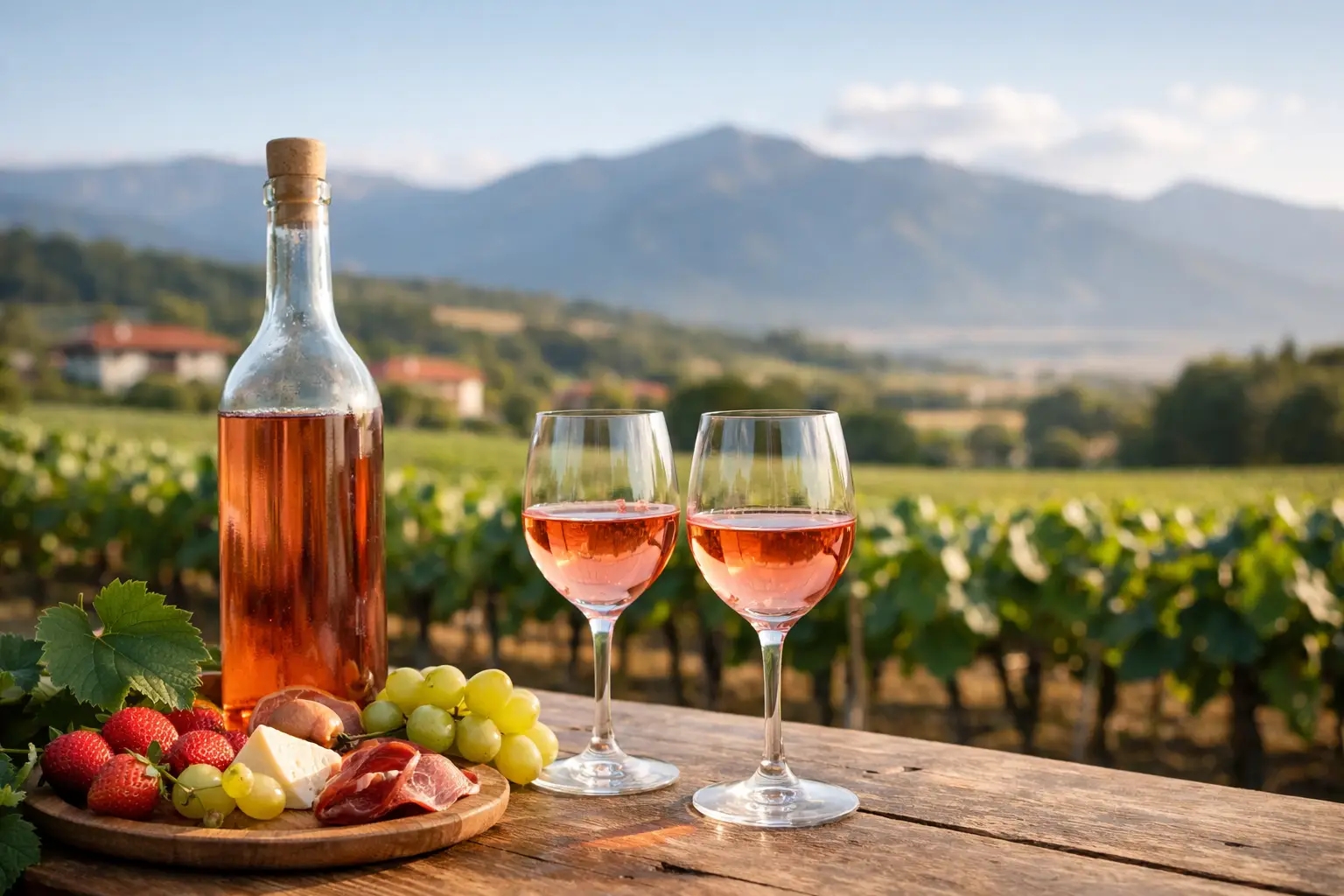
A rosé wine from Bulgaria with character and heritage
When rosé is crafted with care, it shows from the very first glass — not only through its color, but through the purity of its aroma, its freshness, and the sense of origin it carries. This is why Bulgarian rosé increasingly attracts people who are not simply looking for a light seasonal wine, but a bottle with character, balanced style, and a clear connection to the land it comes from.
Bulgarian rosé is no longer an in‑between choice between white and red. The best examples reveal their own identity — fruity, vibrant, yet serious enough to stand confidently on the table, whether paired with food or enjoyed on its own. When the grapes are grown with intention, yields are controlled, and vinification is precise, the result does not rely on trends. It relies on quality.
What Defines Good Bulgarian Rosé
The strongest advantage of Bulgarian rosé is its ability to combine freshness and ripe fruit without unnecessary weight. This is no small benefit. In our wine regions, the sun provides excellent phenolic ripeness, while the right harvest moment preserves the natural acidity that keeps rosé lively and pleasant to drink.
With rosé, every decision is felt clearly. If the grapes are picked too late, the wine loses finesse and becomes heavier. If picked too early, the aroma may remain sharp and underdeveloped. This is why the producer’s expertise is crucial — not only choosing the right variety, but understanding the vineyard, the season, and the exact moment when the fruit is ready.
Bulgaria has another advantage — diverse terroirs. This means rosé here is not a single style. Depending on the region, soil, proximity to the sea, or continental climate influence, the glass may reveal more delicate, mineral, fresh wines or fuller, fruit‑driven, gastronomic expressions.
Why the Black Sea Region Produces an Excellent Style
When speaking about rosé wine from Bulgaria, the Black Sea region deserves special attention. The proximity to the sea brings softness to the climate, helping grapes ripen more evenly and retain freshness. And in rosé, freshness is the foundation on which everything else is built.
These conditions are ideal for wines with a clean aromatic profile, delicate fruit, and good balance. Instead of intensity, clarity is often sought. Instead of excessive sweetness, juiciness is more valuable. This results in rosés that are enjoyable for summer drinking but do not remain superficial.
In a region with such identity, rosé has the chance to be more than a seasonal category. It can be a wine that carries a sense of place — something increasingly important for people who want to know not only what they drink, but where it comes from.
Grape Varieties That Work Well for Bulgarian Rosé
There is no single “correct” variety for rosé — and that is exactly what makes the category interesting. Some varieties offer red‑fruit character and soft structure; others bring floral notes, citrus lines, or more pronounced freshness. In Bulgaria, excellent results come from both internationally recognized grapes and those well adapted to local conditions.
-
Cabernet Sauvignon — often produces rosé with good fruitiness, color, and presence.
-
Merlot — adds roundness and softness.
-
Syrah — suitable for more expressive, modern aromatic styles.
-
Pinot Noir — one of the most distinguished rosé varieties globally, appreciated for its fine aromatic profile, gentle taste, and pale, delicate color. It is the backbone of many elegant rosés from Provence and plays a key role in the world’s most prestigious Champagnes, where it is blended with Chardonnay. In Bulgaria, Pinot Noir performs beautifully, especially in regions with cooler influences that allow it to express its natural finesse and purity.
In some blends, the strength lies precisely in the harmony between varieties — one provides structure, another freshness, a third aromatic finesse.
Rosé does not need extremes. Not every rosé must be pale and airy, nor must it be full‑bodied and intensely fruity. What matters most is consistency and honesty toward the raw material.
When to Choose Bulgarian Rosé
Rosé is one of those wines that fits naturally into many moments. Yes, it is an obvious choice for warm months, late lunches, terrace evenings, or long tables with friends. But when made well, it is not confined to a seasonal image.
It pairs beautifully with salads, fish, seafood, poultry, tomato‑based pasta, soft cheeses, and dishes that combine freshness and texture. Some more structured rosés stand up well even to more serious cuisine.
If you need a universal bottle for a table with different tastes and preferences, rosé is often the smartest choice. It is rarely extreme — and that is precisely why it is so valuable.
How to Recognize Real Value, Not Just Good Packaging
The rosé market is colorful, which is positive, but also confusing. Some wines rely mainly on label design, color, and seasonal appeal. Others are backed by real work — estate‑grown grapes, controlled processes, consistency across vintages, and a clear stylistic vision.
When the producer knows the entire path of the wine — from vineyard to bottle — it is almost always felt. Not only as purity and balance, but as confidence in style.
This is why many enthusiasts choose wines from estates that work close to their land and do not rely on anonymous raw material. In such an approach, rosé is not a by‑product of red wine production, but a standalone category deserving attention. This is exactly the philosophy of Kaliakra Winery — control begins in the vineyard and continues through every step to the finished bottle.
Color Attracts, but It’s Not the Most Important
Many people choose rosé with their eyes first — naturally. From soft salmon to deeper raspberry tones, color creates expectations. But in quality rosé, color is only the beginning. The true evaluation comes from the aroma, taste, and finish.
A lighter color is often associated with a fresher style, but this is not a strict rule. A deeper rosé is not necessarily heavier or lower in quality. Color depends on the variety, skin contact, and the chosen winemaking approach.
A well‑made rosé should be clean, bright, and well‑structured. Its aroma may evoke strawberry, raspberry, cherry, pink grapefruit, or delicate floral notes. The taste should have movement — a fresh start, a juicy mid‑palate, and a finish that invites another sip rather than weighing down the palate.
Bulgarian Rosé and Trust in Origin
For more and more people, buying wine is not just about price or label. The story, region, vintage, and producer’s philosophy matter — especially in rosé, where subtle differences make a big impact.
When you know where the grapes come from and who stands behind the wine, the choice becomes calmer. There is trust. And trust is essential, because quality is not measured only in the first sip, but in consistency — whether the bottle meets expectations, carries style, and makes you return to it.
Bulgarian rosé has every reason to be sought not as a curious alternative, but as a conscious choice. It offers excellent raw material, diverse terroirs, modern winemaking culture, and more producers with clear identity.
The beauty of a well‑made rosé is that it does not need to explain itself for long. It simply stays in memory — with freshness, balance, and a sense of place. If you are looking for a bottle that brings both lightness and character, Bulgarian rosé deserves to be among your first choices.
FAQ
1. What makes Bulgarian rosé wine stand out?
Quality Bulgarian rosé combines freshness, ripe fruit, and a balanced style, reflecting the diversity of local terroirs.
2. Which grape varieties work best for Bulgarian rosé?
Common choices include Cabernet Sauvignon, Merlot, Syrah, and blends that offer harmony between aroma, structure, and freshness.
3. When should you choose Bulgarian rosé wine?
Rosé is ideal for summer meals, seafood, salads, poultry, and as a versatile bottle for mixed preferences at the table.
Author: Desislav Kostov