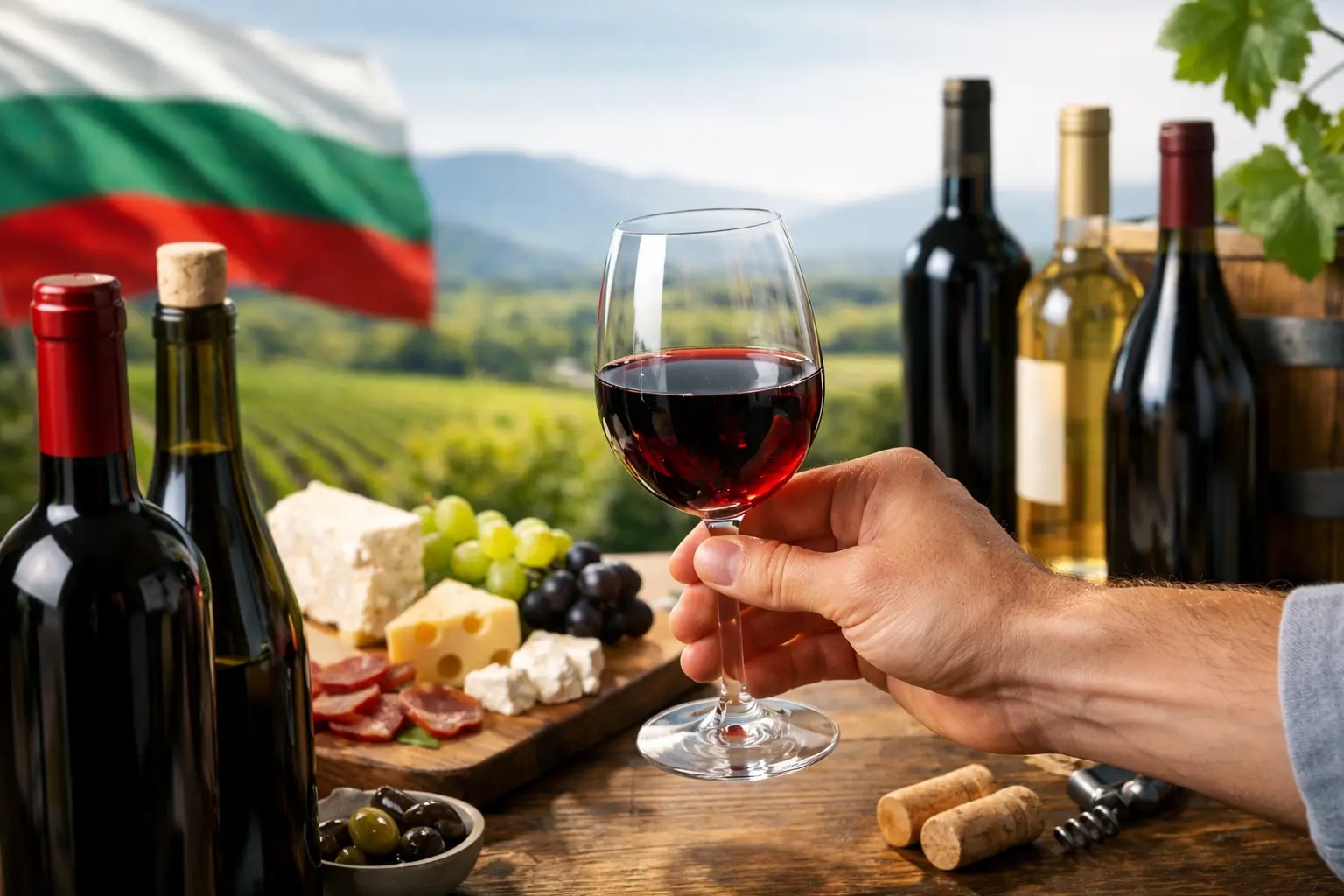
How to Choose the Right Bulgarian Wine
There’s a moment at the shelf or in the wine list when the choice seems simple — white, rosé, or red. Then come the labels, varieties, regions, vintages, and the familiar hesitation. If you’re wondering how to choose Bulgarian wine so the bottle meets your expectations, the good news is that you don’t need to speak like a sommelier. You only need to know what you’re looking for in the glass and what the wine itself tells you even before you open it.
Bulgarian wine deserves this kind of attention. It’s not just a local choice out of patriotism, but a real opportunity to discover character, terroir, and style that are often missing in mass international offerings. When the bottle comes from a producer who controls the path from vineyard to label, the chance of getting honest, well‑crafted wine is much higher.
How to choose Bulgarian wine according to the occasion
The most common mistake is trying to find “the best” wine in general. Such a thing doesn’t exist. There is only the most suitable wine for the specific moment. A bottle for a summer evening on the terrace is not chosen the same way as wine for a game dinner, a gift for a connoisseur, or a gathering with friends where the food is grilled and the conversation matters more than formal tasting.
For light and fresh occasions, white wines with clean aroma and good acidity — as well as dry rosés — usually work very well. They are easy to pair, accessible in style, and rarely tire the palate. For richer food, long evenings, and the autumn‑winter season, red wines naturally come into play, but even there it matters whether you want a fruit‑forward, softer style or a more structured wine with aging potential.
A gift is a category of its own. You’re not buying only taste — you’re buying confidence. It’s better to choose a wine with clear origin, well‑defined style, and a story behind it, rather than a flashy label without substance. People feel the difference.
Start with the region, not just the grape
When someone is still finding their way, the grape variety seems like the easiest anchor. Sauvignon Blanc, Chardonnay, Merlot, Cabernet — familiar names. But with Bulgarian wine, the region often tells you more than the variety itself, because it is the region that gives the recognizable signature.
The Black Sea wine region, for example, is a natural choice for more elegant, aromatic, and fresh white wines, as well as rosés with lively character. The maritime influence, winds, and specific climate preserve freshness in the grapes and often lead to a finer, more balanced style. This matters for anyone who isn’t looking for heaviness, but for purity and expressiveness.
The country’s interior and warmer zones often produce fuller, riper red wines with more body and softness. This doesn’t mean one is better than the other. It means you should choose according to your expectations. If you want fresh, gastronomic wine, the region is key. If you want power and richness — also.
How to read a wine label without unnecessary complexity
A label is not decoration. It is the first conversation between the producer and the buyer. A good label doesn’t hide important information — it arranges it so you can make a calm, confident decision.
Start with the producer. When a winery stands behind the bottle with its own grapes or with clear control over the fruit and vinification, this is usually reflected in the wine itself. Then look at the vintage. For whites and rosés, recent vintages are often the preferred choice when freshness and fruit are the goal. For reds, it depends on the style — some are made for early drinking, others benefit from time.
The grape variety is your next clue. If you already know you prefer aromatic white wines, look for those profiles. If you enjoy softer, fruit‑forward reds, avoid choosing the heaviest wine on the shelf out of habit. The alcohol level also speaks. Higher alcohol may suggest a riper, fuller wine, but it is not an automatic sign of quality.
The description matters too. If everything sounds overly generic — no region, no varietal clarity, no stylistic direction — your attention should increase. A good producer has no reason to be vague about their origin.
Single‑varietal wines or blends — which is the better choice?
There is no universal right answer. A single‑varietal wine is a great choice when you want a clearly expressed character of a specific grape. It’s also ideal when you’re still discovering your taste, because it gives you a clean reference point. It’s easy to understand whether you enjoy the fresh aromatics of a certain white variety or the soft fruitiness of a particular red.
A blend, on the other hand, often showcases the craftsmanship of the winery. The idea is not for one grape to dominate, but for different qualities to come together into a more complete wine — aroma, structure, freshness, length. Sometimes the blend is the more interesting and harmonious bottle, especially when it’s made with intention rather than as a technical shortcut.
If you’re choosing wine to pair confidently with food, a well‑made blend is often a very smart move. If you’re choosing wine to understand the character of a region or a grape, a single‑varietal wine may be more revealing.
Vintage matters — but not in the way many people think
It’s often assumed that older wine is more valuable. This is true only in certain cases. Not every wine is made for aging, and not every bottle improves with time. Many white wines and rosés are at their most beautiful when young — lively, clean, and energetic.
With reds, things are more nuanced. More structured wines can benefit from a few years, as tannins soften, aromas develop, and the taste becomes more complete. But if you don’t know the style of the specific bottle, don’t treat age as a guarantee.
The more useful question is different — what kind of year was it for the vineyards, and how did the producer work with that vintage? A strong producer knows how to show the best of a given year, even when conditions were challenging. That’s where experience and care become visible.
Price and quality — where is the reasonable balance
A low price doesn’t always mean poor wine, just as a high price doesn’t automatically promise class. With wine, you pay for many things — grape quality, vineyard yield, technology, aging, bottle, cork, the work of the team, the winery’s reputation. That’s why the cheapest bottle is rarely the best value.
It’s wiser to look for an honest price for a clear origin. Wine made from the winery’s own grapes, with control throughout the entire chain and with a consistent style, usually gives you more confidence for your money. This is especially important when buying online, where you can’t rely on an immediate recommendation on the spot.
It also helps to think in categories. There are everyday wines that should be pleasant, clean, and reliable. And there are bottles for special occasions, where you’re willing to pay more for complexity, aging, or a more distinctive character. The problem is not the budget — it’s the mismatch between expectation and choice.
How to choose Bulgarian wine when you’re not sure what you like
If you’re uncertain about your preferences, don’t start with complex descriptions — start with your habits at the table. If you enjoy fish, seafood, salads, soft cheeses, and lighter cuisine, you will likely feel comfortable with fresh white wines and dry rosés. If you prefer roasted meats, aged cheeses, mushrooms, and richer sauces, it’s more natural to reach for red wine.
A simple guiding question helps: are you looking for freshness or fullness? Freshness brings lightness, aroma, and the desire for another glass. Fullness brings warmth, depth, and slower drinking. Both have their place — just not in the same moment.
Whenever possible, choose producers who show their face clearly — region, vineyards, style, approach to vinification. That’s how trust is built. In a world of loud labels and quick promises, transparency is what distinguishes a truly valuable choice. That’s why for many wine lovers, real confidence comes from wineries like Kalikra Winery, where the connection between land, grape, and bottle is visible, not just narrated.
The best choice is the one with origin and character
In the end, when we think about how to choose Bulgarian wine, we’re not looking for just a drink. We’re looking for a signature. A wine that carries its place, shows care in its craftsmanship, and stands confidently both on the everyday table and in a special moment.
Next time, let the label guide you — not through promises, but through facts: region, grape variety, vintage, style, producer. When these elements are honest and clearly arranged, the choice is no longer difficult. It becomes personal.
FAQ
1. How should I choose Bulgarian wine based on the occasion?
Light meals → fresh whites and dry rosé. Rich food / autumn‑winter → reds (fruit‑forward or structured). Gifts → wines with clear origin, style, and story.
2. Why is the region so important?
Because region defines character:
Black Sea → elegant, aromatic whites and rosé.
Interior regions → fuller, riper reds.
3. How do I read a wine label without overthinking it?
Look for producer, region, vintage, variety, alcohol, and style.
Clear label = clear origin.
4. Should I choose varietal wine or a blend?
Varietal → pure grape character, great for learning your taste.
Blend → craftsmanship, harmony, often more food‑friendly.
5. Does vintage matter?
Yes, but not always as people assume.
Whites/rosé → younger is better.
Reds → depends on style; not all wines improve with age.
Author: Ani Kostova