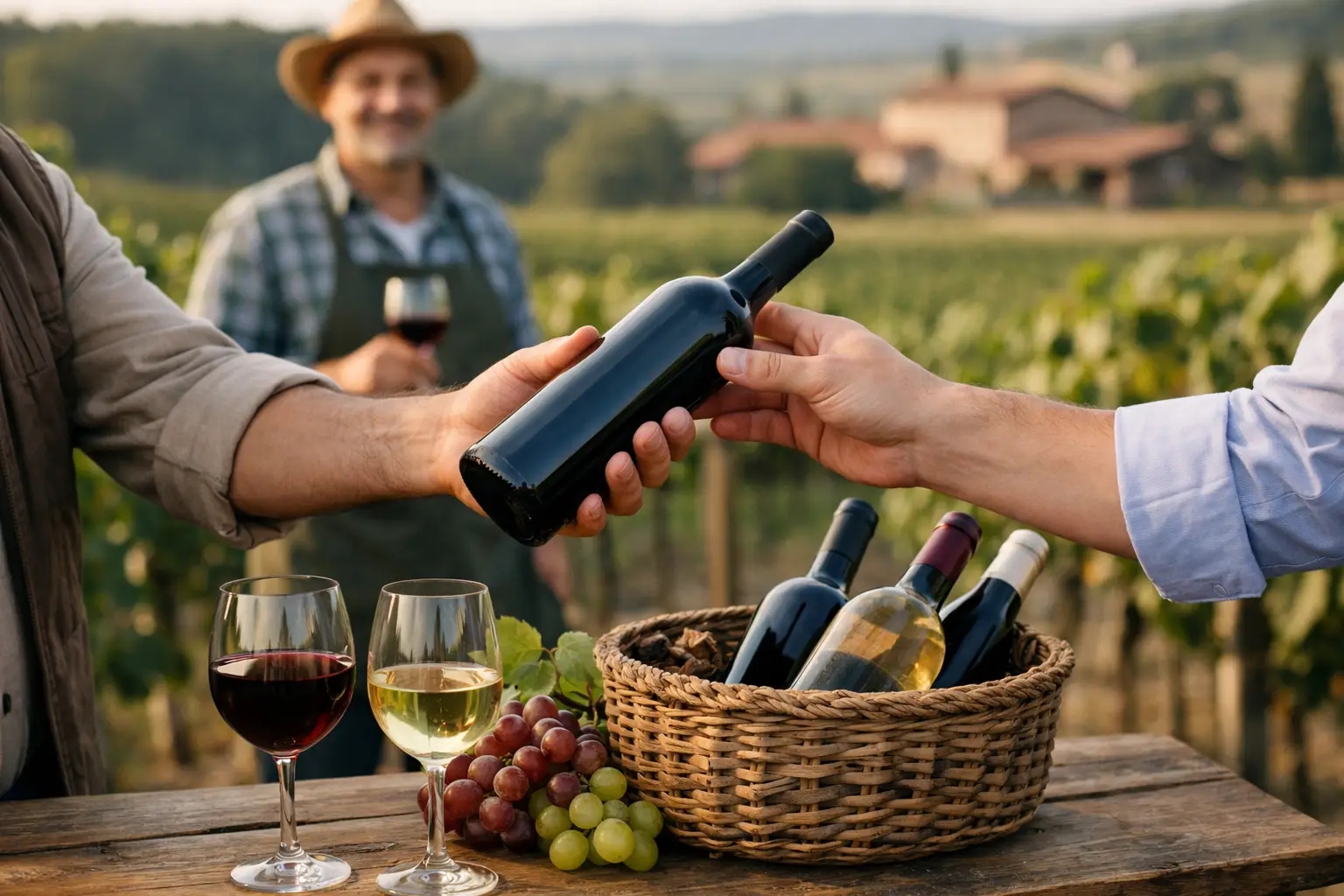
Wine directly from the producer — what you gain
When you choose wine directly from the producer, you’re not simply buying a bottle. You’re choosing a signature, a land, a vintage, and an attitude that begins long before the label reaches your table. This is the difference between wine that has passed through many hands and wine backed by a clear answer to where it comes from and why it tastes the way it does.
The Bulgarian market offers plenty of choice, but trust isn’t earned through promises. It comes when the producer knows their grapes, works with a consistent style, and doesn’t rely solely on attractive design or loud advertising. That’s why more and more people seek a direct connection with the winery — not just for the price, but for the certainty that they’re getting wine with origin and character.
Why wine bought directly from the producer has a different kind of value
With direct purchase, the value isn’t only commercial. It lies in the ability to know who grows the vineyards, how the grapes are selected, and what philosophy stands behind each series. This is especially important for wines that aim to express terroir rather than follow a mass‑market flavor profile.
When a winery controls the path from vineyard to bottle, decisions are made more carefully. Harvesting isn’t just a date on the calendar — it’s a moment chosen according to grape maturity. Technology isn’t a goal in itself — it’s a tool to preserve the fruit’s character. And the assortment isn’t built by template, but according to what the land and the vintage can give best.
This is where direct connection with the producer matters. It shortens the distance between labor and taste. For the customer, this means more clarity. For the wine — more honesty.
What you actually get when you buy directly from the winery
The first thing is traceability. A good producer offers a clear story of origin — region, grape variety, vintage, style. This isn’t decoration; it’s part of the wine’s value. In a world where many wines look similar on the shelf, origin is what makes a bottle recognizable.
The second is better quality control. When the producer sells their own wine, they protect their name with every bottle. There is no comfortable distance between the one who makes the product and the one who offers it. If the wine is good, the merit is clear. If it isn’t, the responsibility is too.
The third is a more meaningful choice. Instead of wandering among dozens of unfamiliar labels, you can select wine based on occasion, food, season, or personal taste — grounded in real information. This is especially valuable for people who don’t want to talk about wine in a complicated way, but do want to choose well.
Wine directly from the producer — is it always cheaper?
Not necessarily. And it’s not the most important question.
Yes, sometimes buying directly leads to a better price because the chain is shorter. But value isn’t measured only in discounts. With quality wine, what matters is whether you’re paying for real origin, well‑grown grapes, careful vinification, and consistency in style. A cheap bottle isn’t a good deal if the taste is anonymous or unstable.
There’s another nuance. Small and medium producers often don’t operate with the logic of mass volumes. They produce according to what the vineyards and the vintage allow, not according to the need to keep shelves full at any cost. This may mean smaller quantities — but also more character. For wine lovers, that’s a reasonable trade.
How to recognize a serious wine producer
You don’t need to be a sommelier to sense when a winery works with real care. There are a few clear signs.
First, the producer speaks specifically about their wines — not vaguely about “quality,” but about grape varieties, vintages, styles, region, and production methods. Second, the portfolio has logic. The whites, rosés, and reds aren’t gathered randomly; they show direction and an understanding of the consumer. Third, there is a visible sense of responsibility — toward the land, the grapes, and the customer.
Another good sign is when the producer offers more than a commercial transaction. Tastings, the opportunity to get to know the winery, a clear story about the region, and attention to detail show that the wine is not just a product but a complete experience.
The role of terroir — why place has flavor
In wine, place is not a backdrop. It is part of the taste itself. Soil, climate, proximity to the sea, winds, hours of sunlight — all of this becomes style. That’s why wine with a clear regional origin is easier to remember. And that’s why buying directly from the producer has an advantage when you’re looking for authenticity rather than anonymous correctness.
The Black Sea wine region, for example, offers conditions for freshness, aromatic purity, and good ripeness — especially in white wines and rosé, but also in reds with balanced character. When the producer works in harmony with these natural traits, the result is not a forced imitation of a foreign style, but a wine with its own identity.
This is one of the main reasons people seek Bulgarian wines with origin. Not because they must be local at any cost, but because they carry a sense of place and meaning.
What is the advantage of ordering online directly from a winery
For many customers, online shopping is the most convenient way to access wines they would rarely find in mass retail. But convenience alone isn’t enough. What matters is what stands behind it.
When you order from the winery itself, you usually get more up‑to‑date information about availability, vintages, and specific series. It’s easier to find seasonal releases, limited batches, or larger formats for everyday and practical consumption. This helps people who want both a great bottle for a special dinner and a reliable choice for a gathering with friends.
An online store run by the producer — someone who knows their own portfolio — makes choosing easier. Instead of confusion, you get direction. Instead of an anonymous description, you get confidence in what to expect in the glass.
Who benefits most from buying wine directly from the producer?
Wine directly from the producer is a strong choice for people who value secure origin and want to build a more personal relationship with what they buy. It’s suitable for beginners who are still searching for their style, because they can compare varieties and series within one clear philosophy. It’s also ideal for more experienced wine lovers who know that good wine doesn’t begin in the shop — it begins in the vineyard.
It makes sense for hosts who choose wine according to the occasion. A fresh white for fish and seafood, a rosé for summer afternoons, a red for slower evenings, a larger bottle for shared moments — when everything comes from one producer with a consistent standard, the choice becomes easier.
Tradition and technology — not one against the other
One of the common misconceptions is that good wine must be either entirely traditional or entirely modern. The truth is more interesting. Strong wineries know how to combine respect for craftsmanship with precise technology. Tradition provides measure; technology provides control.
This shows in the small decisions — how aroma is preserved in white wines, how oak is used in reds, how balance is sought without losing the fruit. A producer who understands both sides doesn’t compromise either identity or purity of style.
This is where the strength of wineries that close the entire cycle becomes visible. When viticulture, vinification, and presentation are part of one system, quality isn’t an accident. It is the result of consistency.
Kaliakra Winery works exactly with this logic — from grape to finished wine, with respect for the Black Sea character and with the clear understanding that trust is earned not with words, but with every next bottle.
When direct purchase is not enough on its own
Here, an important clarification is needed. The fact that a wine comes directly from the producer does not automatically make it good. There are wineries with a clear name but an unclear style. There are producers with a beautiful story but without consistency in quality. That’s why direct access is an advantage — but not a substitute for professional care.
It’s worth looking for a producer who not only sells directly, but produces responsibly. The difference is felt quickly — in the purity of the aromas, in the balance, in whether the wine stays in your memory even after the last sip.
The best thing about direct purchase is that it brings meaning back into the choice. Instead of picking a random bottle, you can choose a wine that knows its roots. And when the glass holds origin, care, and character, the taste rarely feels accidental.
FAQ
1. Why does wine bought directly from the producer have unique value?
Because you receive origin, craft, vintage, and philosophy, not just a bottle. Full control from vineyard to bottle creates authenticity.
2. What do you actually get when buying directly?
Traceability → region, grape variety, vintage, style.
Quality control → the producer protects their reputation.
A more informed choice → real information, not marketing.
3. Is direct purchase always cheaper?
Not always — and price is not the main value. What matters is origin, craft, consistency, not discount.
4. How to recognize a serious producer?
Clear details about grapes, vintages, style; logical portfolio; responsibility toward land and customers.
5. Why is terroir so important?
Because place shapes taste — soil, climate, sea, sun. The Black Sea region offers freshness, clarity, balance.
Author: Desislav Kostov