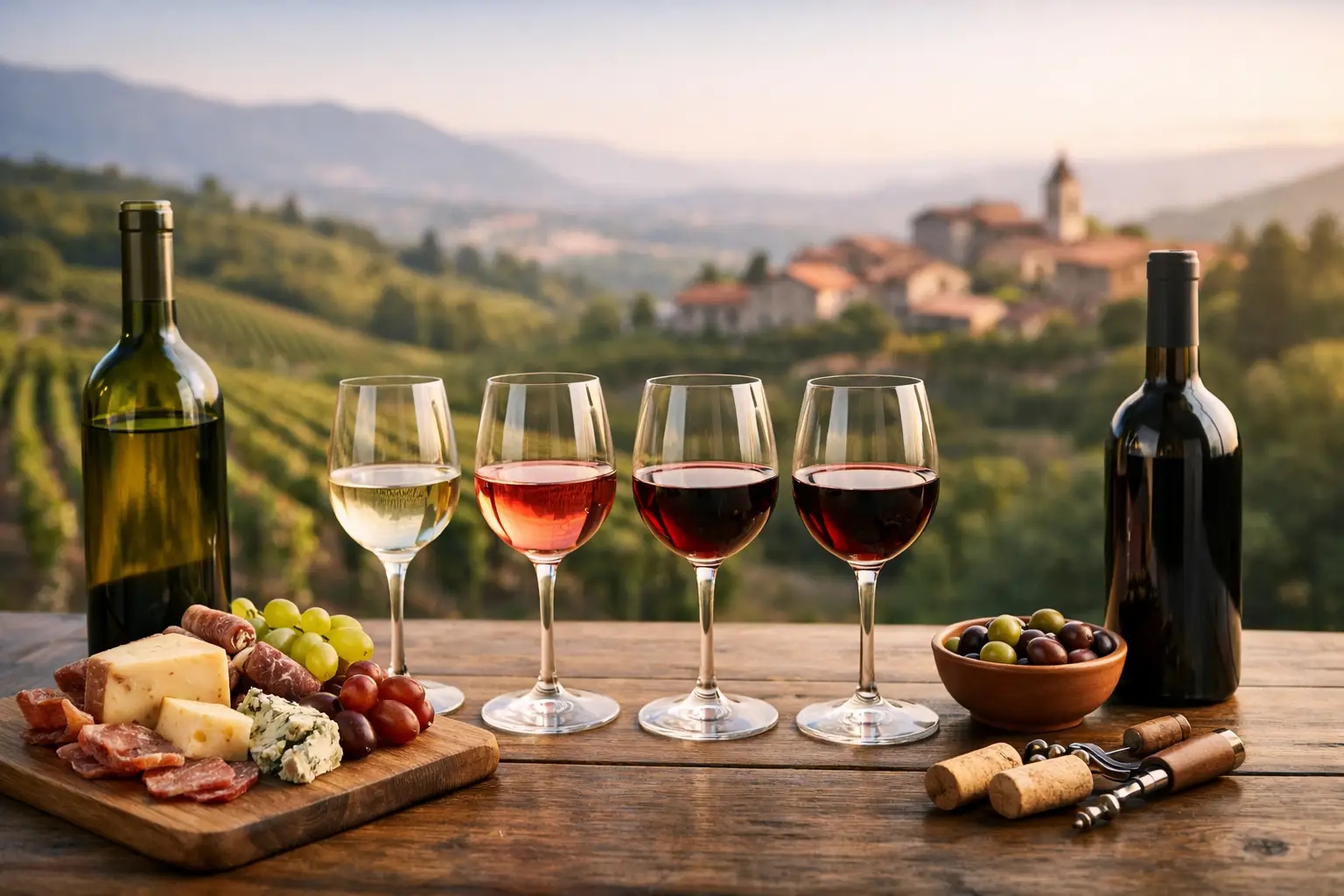
Wine Tastings
This is why wine tastings have a special value — they are not about showing off, but about meeting the wine’s character, the land it comes from, and the people behind it. When wine is tasted where it was created, every glass speaks more clearly.
Many people arrive at a tasting expecting complicated terminology and strict rules. The truth is better. A good tasting doesn’t require you to be a specialist. It requires attention, curiosity, and the willingness to feel the differences between grape variety, vintage, style, and terroir. The rest comes naturally when the wine is made with care and presented honestly.
What makes wine tastings truly valuable
The strongest aspect of a tasting is context. In a shop you see a label, a grape variety, and a price. On site you get much more — why a white wine is fresh and mineral, why a rosé is juicier and more gastronomic, why a red shows softness in one vintage and firmer structure in another. This isn’t a theoretical lesson; it’s a direct sensation.
Wine tastings also offer something that descriptions alone rarely convey — trust. When the producer knows the vineyard, follows the grapes, and protects their style from vine to bottle, the wine gains weight. Not just as a product, but as a choice with clear origin. For people who seek character rather than mass taste, this matters.
There is another important point. A tasting helps you discover your own taste, not simply follow someone else’s preferences. Sometimes a person is convinced they only like red wine until they try an expressive white with good structure. Sometimes they look for a light rosé and find a blend that works beautifully with food. These small surprises are what make the experience valuable.
How to approach wine tastings
Approach matters, but it shouldn’t be pretentious. The best way to enter a tasting is calmly, without trying to impress anyone. Your nose and palate work better when you don’t force them. Look at the color, sense the aroma, take a slow sip, and give yourself time. The first impression is important, but not always final.
It’s helpful to compare, not judge each glass on its own. When two white wines are from different varieties, or two reds from different vintages, the differences are easier to remember side by side. This is how you begin to recognize not only what you like, but why you like it.
And there’s no problem asking questions. On the contrary — that’s part of the point. Ask about the grape variety, the vinification style, the foods the wine pairs well with, and what was characteristic of that particular year. A good producer doesn’t hide the process. They explain it clearly, because they know how much work stands behind every bottle.
What to look for in the glass
Many people worry they won’t “identify” the wine correctly. But a tasting is not an exam. It’s observation. The color hints at freshness, density, and sometimes age. The aroma shows whether the wine is open, juicy, floral, fruity, spicy, or more mature. The taste gives the full picture — acidity, body, structure, softness, length.
With white wines, purity and freshness are often sought, but that doesn’t mean uniformity. One white can be light and airy, another more structured and serious, especially when crafted with care and good grape ripeness. With rosés, balance is decisive. If they are too light, they are quickly forgotten. If made with precision, they stay fresh but also have character.
Red wines show even more clearly how important origin is. Tannins, density, and aromatic profile can be noble and persistent without the wine feeling heavy. This is where craftsmanship becomes visible — when strength doesn’t overshadow finesse.
Why place changes taste
The same bottle is perceived differently in different settings. This isn’t imagination — it’s reality. When you’re close to the vineyards, when you see the landscape, feel the air, and understand the conditions in which the grapes were grown, the wine becomes more intelligible. The term terroir is often used lightly, but it actually means exactly this — the connection between land, climate, grape variety, and human care.
The Black Sea wine region has its own signature. It offers conditions for wines with freshness, aromatic clarity, and good vitality, yet also with sufficient ripeness when the vintage is guided properly. This combination is especially valuable for people who seek wine with a recognizable style rather than anonymous universality.
When the tasting is part of the place, not just part of the commercial act, the choice becomes more confident. You don’t buy a bottle only because it tasted good on the first sip. You buy it because you understand how it was made and why it carries exactly this character.
Wine tastings for beginners and for advanced wine lovers
One of the best qualities of a good tasting is that it can be equally valuable for different people. A beginner needs clarity and calm. They want to understand how to distinguish styles without being overwhelmed by unnecessary complexity. An advanced wine lover seeks nuance — more information about the vintage, the technology, the maturation, and the logic behind a particular blend.
There is no contradiction here. When the presentation is honest and competent, both groups receive value. Some gain confidence in their choices, while others find a deeper reason to return again. This is the strength of places like Kalikra Winery, where the tasting is not detached from the production — it comes directly from it.
How to choose the right wine tasting
Not every tasting aims for the same experience. Some are lighter and social, others focus on the winery’s style, and some emphasize food pairing. The best choice depends on what you’re looking for. If you want to understand a region and a producer, look for a place with its own grapes, a clear story, and a consistent style. If you simply want a pleasant evening, the format can be more informal.
The breadth of the selection also matters. Too many wines in one session tire the senses. Too few don’t provide enough basis for comparison. A well‑curated line of whites, rosé, and reds — arranged logically and accompanied by short, meaningful explanations — often delivers more than an overloaded program.
It’s also worth considering the season. In warm months, fresh whites and rosés feel more natural, while in cooler weather red wines show their full presence. This isn’t a rule, but a guide. Truly good wine finds its moment, yet the setting always influences perception.
After the tasting comes the real choice
The meaning of a tasting doesn’t end with the last glass. That’s when the more interesting part begins — which wines you would take home, which you would share at dinner, and which you would return to months later. This is where the difference between a momentary impression and a lasting preference becomes clear.
Sometimes the most aromatic wine on the table isn’t the best choice for food. Sometimes the more restrained one on first sip turns out to be the perfect bottle for a dinner with friends. That’s why it’s worth thinking not only about what you liked, but also about the context in which you’ll open it. Wine lives best when it’s chosen with intention.
This is precisely why wine tastings remain one of the most honest experiences in the wine world. They don’t promise more than the glass can give. They simply bring you back to what matters most — the origin, the craft, and the pleasure of recognizing a wine with character. And once you feel that difference, your next choice becomes far more personal and far more precise.
FAQ
1. Why are wine tastings so valuable?
Because they offer context, trust, and personal discovery — not just a label, but understanding of style, vintage, terroir, and craftsmanship.
2. Do I need to be a wine expert?
No. You need attention, curiosity, and calm. A tasting is not an exam.
3. What should I look for in the glass?
Color → freshness and style.
Aroma → fruit, floral notes, ripeness, spice.
Taste → acidity, body, structure, softness, length.
4. Why does the place change the taste?
Because terroir is understood best where the wine is made — climate, soil, landscape, human care.
5. How should I approach a tasting?
Calmly, without pretense. Compare wines side by side, ask questions, sip slowly.
Author: Desislav Kostov