How to Store Opened Wine for Longer
A good bottle rarely remains unfinished, but sometimes dinner ends after two glasses, and the wine deserves to be preserved for the next day. The question of how to store open wine is not only practical. It is a matter of care for the work in the vineyard, for the attentive vinification, and for the character the wine reveals in the glass.
After opening, the greatest ally — and at the same time the greatest enemy — of wine is oxygen. A little air helps it open up and show its aromas. Too long a contact, however, leads to oxidation — the fresh fruit weakens, the color darkens, and the taste loses its purity. With the right habits, you can noticeably extend the good moment of the bottle.
How to store open wine: the basic rule
Close the bottle as soon as possible after pouring and put it somewhere cool. These are the two most important steps. The less air remains in the bottle and the lower the temperature, the slower the changes in the wine occur.
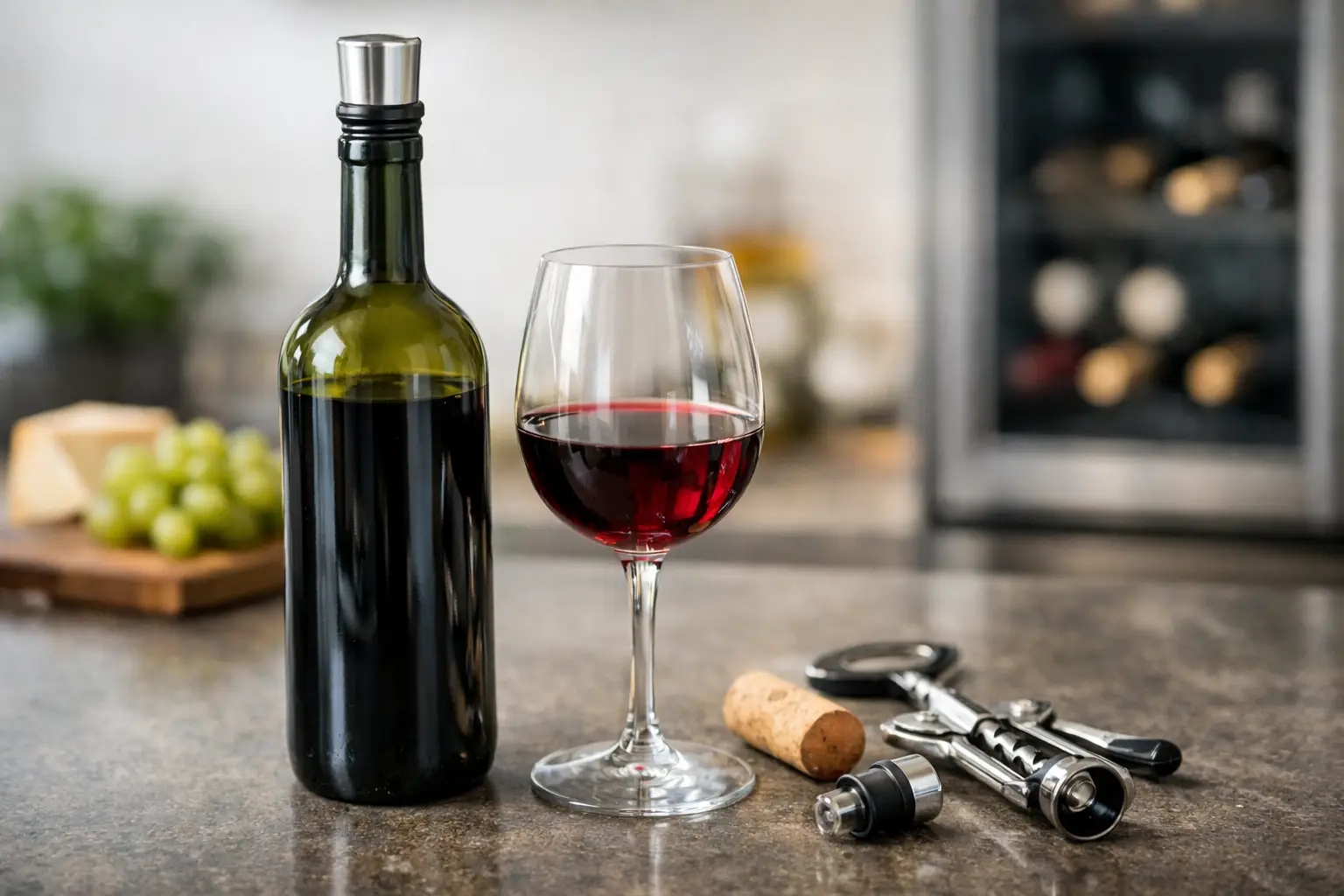
If the natural cork is intact and clean, you can place it back with the outer, clean side toward the neck. Do not turn it with the wine‑stained side outward if it has been left on the table or has touched other surfaces. A silicone stopper with good sealing is also suitable. The goal is not to create a vacuum at all costs, but to limit the constant access of new air.
Store the opened bottle upright. When it is lying down, the surface area of the wine in contact with air is larger, and the risk of leakage is also not to be underestimated. This applies even to bottles with a high‑quality stopper.
The fridge is not only for white wine
White wines and rosés are often placed in the fridge, while red wine stays on the kitchen counter. For a short time this may be acceptable, but if you want to preserve it until the next day, red wine should also be chilled. The lower temperature slows oxidation and the development of unwanted aromas.
Don’t worry that the red will become too cold. Before serving, simply take the bottle out 20 to 40 minutes earlier. This way the wine will return to a more suitable temperature without losing its freshness overnight. With lighter red wines, slight cooling can even highlight their fruity character.
The fridge is a good idea even in winter. The terrace, pantry, or windowsill do not provide stable temperature. Sudden cold, daytime warmth, and direct light are more unfavorable than the steady coolness of the refrigerator.
Light, heat, and the spot next to the stove
Open wine should not be left next to the stove, the radiator, or on a sunny counter. Heat accelerates the processes in the bottle, and light is especially unfavorable for more delicate white and rosé wines. Even a few hours can make the kitchen too warm.
The best place is dark, cool, and calm. Once the bottle is already open, consistency is more valuable than complicated solutions.
How many days do different types of wine last?
There is no single timeframe for all wines. The style, structure, residual sugar, acidity, and the amount left in the bottle change the picture. A bottle from which only one glass has been poured will develop faster than an almost empty bottle, because there is more air above the wine.
Dry white wines usually keep a good profile between 3 and 5 days in the fridge. Fresher styles with good natural acidity often hold well even on the third day, although the aroma becomes more restrained. If the wine is created to impress with floral and citrus notes, it is best to drink it earlier.
Rosé has a similar horizon — most often 3 to 5 days with good sealing and cooling. Its strength is freshness, so don’t postpone unnecessarily. Rosé is wonderful when it preserves clean fruit, lightness, and a lively color, not when it is simply still drinkable.
Red wines last around 3 to 5 days, and more structured ones with more tannins sometimes a bit longer. Tannins act as natural protection, but they are not a guarantee of endless life. A delicate red may lose fruit as early as the second day, while a full wine with good structure may become more harmonious after 24 hours.
Sweet and fortified wines often keep longer — from a week to several weeks depending on the style. Sugar and higher alcohol give better stability, but the same rules apply: good stopper, cool place, and a clean bottle neck.
With sparkling wine, the timeframe is the shortest. A regular stopper will not preserve the bubbles. Use a special sparkling‑wine clip and store the bottle in the fridge. The best result is within 1 to 2 days. The old trick with a spoon in the neck does not replace proper sealing.
Vacuum pump, inert gas, or a small bottle?
A vacuum pump is a useful home tool, especially if you often open red wines and want to enjoy them over several evenings. It removes part of the air, but cannot eliminate oxygen completely. With very aromatic and delicate wines, overly aggressive vacuuming can sometimes make the aroma more closed. This is not a reason to avoid it, but to treat it as a practical, not a magical solution.
Systems with inert gas are more precise. They cover the surface of the wine with gas that limits contact with oxygen. They are suitable for people who want to preserve more special bottles for longer and compare the wine day after day.
There is also a simple professional approach without special equipment: pour the remaining wine into a smaller, perfectly clean glass bottle with a stopper. Fill it almost to the neck. This reduces the air space and gives the wine a better chance to stay alive. Do not use plastic containers for longer storage, as they can affect the taste and do not seal reliably enough.
How to recognize that the wine has passed its moment
Not every change is a flaw. With some red wines, the second day brings softer tannins and a more composed feel. But if the fresh fruity notes are replaced by aromas of vinegar, wet cardboard, caramelized apple, or nuts where such tones shouldn’t appear, the wine is likely oxidized.
The taste may become flat, the acidity may seem sharp, and the finish may disappear quickly. With white and rosé wines, darkening of the color is often noticeable. Don’t rely only on the number of days — trust your nose and palate.
If the wine is not pleasant to drink, you don’t need to pour it out immediately. A small amount can have a place in a sauce for roasted meat, risotto, or a slow‑cooked dish. Still, do not use wine with a clearly pronounced vinegar aroma in the kitchen — it will pass that character on to the food.
Small habits that protect the big bottle
Do not drink directly from the bottle if you intend to store it. Do not leave open wine on the table for hours while the conversation continues. And don’t wait until only one glass remains to look for a stopper — by then, the bottle has already had much more air than necessary.
With wines that have a clearly expressed regional character, careful storage is a way to preserve their story. The maritime climate, the sun, the variety, and the work of the winery are felt best when the wine is fresh and clean. At Kaliakra Winery, we believe that caring for the bottle after opening is a natural continuation of the care from the vineyard to the label.
Next time you leave wine for tomorrow, close it well, chill it, and give it a chance. The following evening, pour a small glass, let it wake up for a minute, and taste it attentively — sometimes that is exactly when the wine reveals a new, quieter side of its character.
FAQ
1. What is the most important rule for storing open wine?
Close it immediately and keep it cold — this slows oxidation.
2. Can I reuse the original cork?
Yes — if clean and intact. Insert it with the clean side outward.
3. Should red wine be refrigerated?
Yes — cold slows oxidation and preserves freshness.
4. Why keep the bottle upright?
To reduce the wine’s contact surface with air and avoid leakage.
5. Where should open wine NOT be stored?
Near heat or sunlight — both accelerate deterioration.
Author: Desislav Kostov